Results

Premise

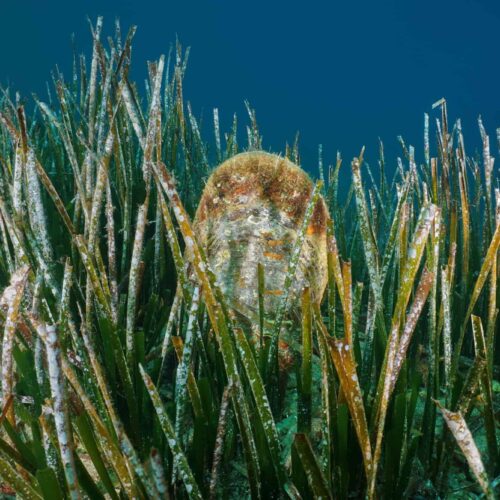
When the LIFE PINNA project was conceived, the northern Adriatic Sea was still home to healthy populations of Pinna nobilis with high densities, with young specimens being quite abundant and easy to find. Starting in the summer of 2020, however, signs of the epidemic spread very quickly and the situation worsened significantly, seriously compromising the recruitment of both adults and juveniles and complicating the development of the project.

For example, in Miramare, the estimate in 2018/2019 was approximately 24,000 individuals, falling to just 105 specimens in 2021, at the start of the project. In Asinara, before 2019, data confirmed the presence of thousands of individuals, which by the end of 2019 had been reduced to 1 and to zero in 2021. In the Tuscan Archipelago, Marine Strategy monitoring in 2018-2020 had reported 245 living individuals, which had dropped to just three living individuals in 2021.

The biggest problem has therefore become the difficulty in finding the ‘raw material’, i.e. Pinna nobilis individuals to be used for captive breeding and translocation. Environmental conditions, in particular the increase in sea temperature and extreme mucilage events in the Adriatic, also seem to have played an important role in worsening the stress and health status of the mollusks.
Expected results and results achieved

A1- A2 - A3

The preparatory actions of the project, A1, A2, A3, were carried out smoothly. Action A1 (Environmental status and health assessment of seagrass meadows and Pinna nobilis populations in donor and receiving areas) involved the characterization of the two donor sites envisaged by the project (Strunjan MPA, Miramare MPA) and the assessment of the suitability of the four receiving sites intended to host the new populations of Pinna nobilis (Capo Mortola MPA, Asinara MPA, Strunjan MPA, Miramare MPA).

Furthermore, the sub action A.2.2 (Identifications of the locations where pathogens are absent) was extended to the end of the project to maintain a constant control of pathogen levels for all the sites involved in the project and further increase the genetic knowledge on the pathogens which have already been or will be associated with the mass mortality of Pinna nobilis such as new species of protozoans and bacteria or viruses

C1

Delays in the action C1 (Identification of pilot sites for restocking) caused a delay in delivering the final product until the following year. Nevertheless the planned outputs were all achieved. The delays in action C1 were mainly related to actions A1.2 and A2 and the need to define the four pilot sites suitable for restocking as pathogen-free and of ecological value. Difficulties in finding sentinels and the need to repeat molecular analyses led to delays in the action A2 with consequent delays in the actions A1.2 and C1.

C2

All project results for Action C2 (Molecular characterization of surviving individuals of Pinna nobilis UNISS) were achieved. Furthermore, sub-Action C.2.1 (Identification of the genetic makeup of still-alive specimens) proceeded until the end of the project to constantly improve the knowledge on the genetic make-up of surviving Pinna nobilis populations and understand how mass mortality acted on the genetic variation of the species.

C3 e C6

The recruitment and translocation activities, foreseen in Actions C3 (Collection and growth of Pinna nobilis self-recruited individuals from the Northern Adriatic) and C6 (Installation of Pinna nobilis specimens at the pilot areas), were severely compromised due to the drastic decline of P. nobilis populations at the donor sites. This situation partially compromised Action C6. This led to the preparation of the Emergency Plan, submitted on January 31, 2024, in which the partnership developed an alternative strategy to achieve the project’s objectives. This strategy includes a series of activities, including identifying a greater number of donor sites and prioritizing in-situ movements of individuals to minimize stress, thus limiting the mortality rate.

C4

Action C4 (Adaptation, breeding, and reproduction for active restocking) was delayed due to the lack of breeders and was not possible in 2022 due to the severe depletion of the adult stock in the Gulf of Trieste. However, milestone C.4.1 (First spawning induction, scheduled for September 2022) was achieved in June 2023, thanks to the availability of adult specimens from the Venice lagoon.

C5

In C5 (Collection and transport of specimens from self-capture to receptor sites), protocols for the collection and transport of all organisms and small tissue fragments have been implemented

D1

Monitoring activities, relating to the assessment of water quality at reintroduction sites using sentinel organisms (D1 – Monitoring of pathogens in restocking sites by using UNISS sentinel species) and the updating of information on the presence of P. nobilis at donor and recipient sites and surrounding areas (D3 – Monitoring of the project’s impact on the P. nobilis* status), were carried out according to the established program.

D2

Action D2 (Monitoring of implanted juveniles), relating to the monitoring of restocked individuals, was delayed due to the aforementioned difficulties, which prevented all the repopulations planned before 2023 (February for Slovenia, March for Miramare, and December for Capo Mortola). Due to the delay in starting monitoring activities, only two of the three originally planned monitoring reports could be completed within the project’s duration.

D3

For Action D3 (Monitoring of the project’s impact on the P. nobilis* status), the lack of a high-density, pathogen-free P. nobilis population at the donor sites postponed the first scheduled transplant event and, consequently, the ex-ante campaign. Therefore, the ex-ante campaign report on the status of P. nobilis at the donor and recipient sites was delivered approximately six months late. The two documents relating to ex-post monitoring and citizen science activities were delivered together with the final report, thus respecting the project timeline. However, since it was not possible to transplant Pinna nobilis specimens at the Asinara site, no ex-post monitoring was conducted. The ex-post monitoring campaign also focused on searching for surviving Pinna nobilis specimens, using both scientific divers and remotely operated vehicles (ROVs).

E1

The E1 (Communication) strategy developed for Life PINNA has received considerable press coverage. For this reason, while maintaining communication activities on the website and social media, considerable efforts have been made to engage journalists in both Italy and Slovenia and to appear in a wide range of media outlets, including television and international press.

The original documentary release date (October 2023) has been postponed to February 2024 to accommodate the development of the main action. Specifically, the first transfer of captive Pinna nobilis to Capo Mortola, Liguria, at the end of December 2023, was one of the key topics to be covered.

E2

The Transfer and Replicability Plan and the methodological and operational protocols that could be effectively replicated in other Mediterranean contexts have been implemented. During the implementation of Action E2 (Replication and Transfer), the approach has evolved significantly. The rapid and severe worsening of mass mortality events affecting Pinna nobilis, combined with the urgent call for coordinated guidelines at the Mediterranean scale, highlighted the need for an immediate and structured mechanism. Consequently, the project shifted from an individual organization-based approach to a basin-wide institutional process. This shift materialized in the formal request received in January 2022 from SPA/RAC for the development of the Mediterranean Recovery Plan for Pinna nobilis, subsequently adopted in December 2023 by the Contracting Parties to the Barcelona Convention. This collective institutional support effectively replaced the initially envisaged individual expressions of interest, ensuring a broader, more binding, and long-term commitment to the adoption and implementation of LIFE Pinna protocols throughout the Mediterranean.

E3

During the period 2022-2025, LIFE PINNA developed several networking activities for E3 (Networking and synergies with other LIFE and/or non-LIFE projects). The first LIFE PINNA networking event has been postponed to June 2024, rather than October 2023, to share the most significant results of the project’s actions, particularly the results of the initial introduction and monitoring of Pinna at Capo Mortola and the new larval collector in the Adriatic Sea. Overall, Action E3 provided a realistic and experience-based economic assessment of the transferability of LIFE Pinna solutions to other MPAs, particularly in complex and operationally challenging island contexts.

F1

For F1 (Project coordination and management, After LIFE plan and Green procurement), following the third monitoring visit, held in Genoa in October 2023, the Technical Monitor, view the status of the progress of the LIFE Pinna project, recommended that the partnership draft a Contingency Plan (CP). Following this request, the submission of the Mid-Term Report has been postponed from December 1, 2023, to February 28, 2024.

The After LIFE Plan was developed by Triton Research, discussed, and approved by the Coordination Committee, which plans the activities necessary to ensure the sustainability of the Project after its conclusion, in order to increase its long-term effectiveness.

Main actions carried out

(For details download the Laymans Report)

  • Monitoring of the seabed in the northern Adriatic Sea, the Ligurian Sea, and Sardinia
  • Installation of larval collectors in the Adriatic Sea,
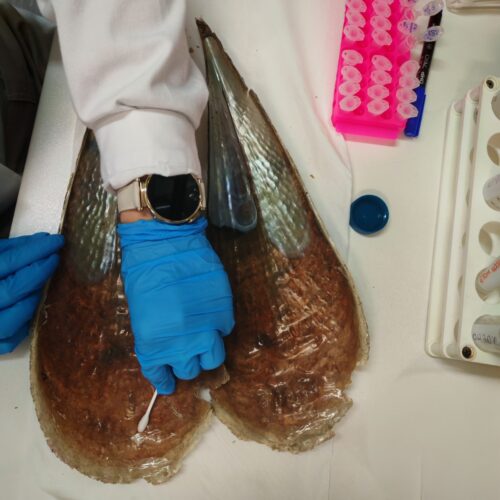
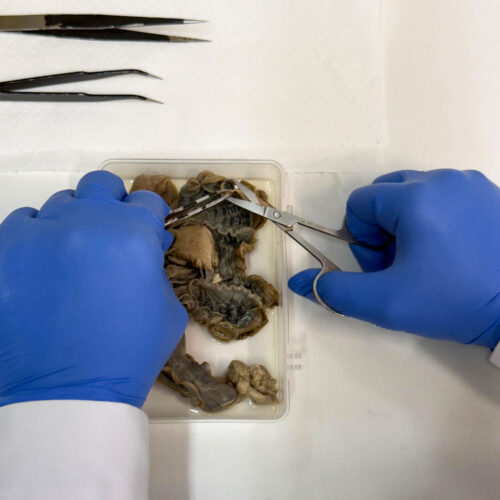
  • Genetic analysis at the University of Sassariof surviving populations of P. nobilisand of so-called “sentinel” bivalves
  • Request for authorization under DPR 357/97. In Italy, to manipulate Natura 2000 species such as Pinna nobilis, a special authorization must be obtained from the Ministry of the Environment and Energy Security (MASE), based on a highly detailed feasibility study.
  • Collecting adult Pinna nobilis individuals from the Venetian Lagoon
  • Collection of adult individuals “at risk” of damage in the Gulf of Trieste,
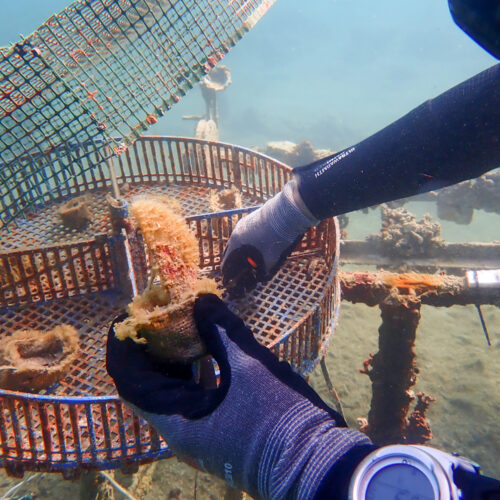
  • Transfer of small pinnids found on larval collectors to lanternets
  • Captive breeding in laboratories in Camogli, Trieste, and Piran
  • 3D fin placement for hydrodynamic evaluation tests
  • Transplants

Focus

Advanced larval development

Researchers at the University of Genoa have successfully fertilized Pinna nobilis and managed to extend larval development to 21 days, reaching the initial umbonate larva stage 16 days after fertilization, with a shell length of 150 microns, a size never before achieved for this species.

Reliable protocols

The intense collaboration between the partners has made it possible to develop detailed protocols for transport, maintenance, and reproduction, which are discussed in the article “Endangered and Pathogen-Affected Species, for Controlled Reproduction: Precautions Taken” published
in the scientific journal Ecology and Evolution.

Forensic techniques

University of Sassari developed two different protocols that may be applied in the future to mussel farming or in cases where molecular analysis is required on species under strict protection. The first, based on non-invasive forensic techniques, involves the extraction of DNA from biological samples of living individuals and even from shell fragments.

Successful transfers

During the project, dozens of individuals were transported, even for distances of up to 500 kilometers, and transplanted, achieving a mortality rate of zero during transport, demonstrating the effectiveness of the protocols adopted.

International networking

One of the project’s legacies is the creation of an international working group that today involves researchers from various disciplines, from ecology to reproduction, who study Pinna nobilis throughout the Mediterranean basin and transparently share current knowledge to develop new strategies.

Photo contest

In summers from 2022 to 2025, a photography contest was also launched, open to every-one and dedicated to images that showcase the beauty of the biodiversity of the Mediterranean seabed. The competition attracted hundreds of entries and the winning images can be viewed on the website.

Citizen Science

A Citizen Science campaign called “Report the Pinna!” was launched as part of the project. It was disseminated through digital channels, traditional media, and live and online training sessions. Through an interface created by ARPAL technicians and available on the website lifepinna.eu, reports from citizens were collected and then largely validated by LIFE Pinna researchers. This approach led to the collection of over 60 reports, with more than 50 live individuals, including some small populations surviving in the central Adriatic and Sardinian Seas that were previously unknown to biologists.