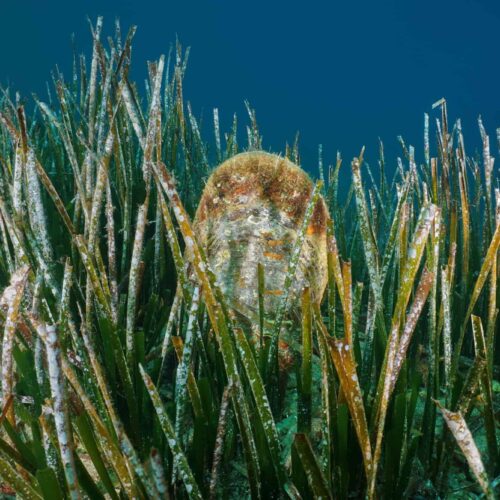
When the LIFE PINNA project was conceived, the northern Adriatic Sea was still home to healthy populations of Pinna nobilis with high densities, with young specimens being quite abundant and easy to find. Starting in the summer of 2020, however, signs of the epidemic spread very quickly and the situation worsened significantly, seriously compromising the recruitment of both adults and juveniles and complicating the development of the project.
For example, in Miramare, the estimate in 2018/2019 was approximately 24,000 individuals, falling to just 105 specimens in 2021, at the start of the project. In Asinara, before 2019, data confirmed the presence of thousands of individuals, which by the end of 2019 had been reduced to 1 and to zero in 2021. In the Tuscan Archipelago, Marine Strategy monitoring in 2018-2020 had reported 245 living individuals, which had dropped to just three living individuals in 2021.
The biggest problem has therefore become the difficulty in finding the ‘raw material’, i.e. Pinna nobilis individuals to be used for captive breeding and translocation. Environmental conditions, in particular the increase in sea temperature and extreme mucilage events in the Adriatic, also seem to have played an important role in worsening the stress and health status of the mollusks.